
Poetry Prompts for Fall
It seems like summer always passes too quickly and winter lasts too long. Maybe that’s why fall is a favorite season for so many people. It seems to hang around just long enough. It’s not too hot, not too cold — a mild, colorful, and comfortable season. Every fall, my creativity goes into overdrive, and…Read More

Storytelling Exercise: Managing Our Ideas
Today’s storytelling exercise is an excerpt from my book, Story Drills: Fiction Writing Exercises, which helps beginning to intermediate storytellers develop skills in the craft of fiction writing. This exercise is designed to help you manage your writing ideas (or lack thereof). It’s called “Managing Our Ideas.” Enjoy! All the storytelling skills in the world…Read More

Writing Description in Fiction
Today’s post includes excerpts from What’s the Story? Building Blocks for Fiction Writing, chapter eight: “Description and Exposition.” Enjoy! Without description, readers wouldn’t be able to visualize what’s happening in a story. We need to see the setting and the characters. Because there are no visuals in prose, writers must use words to describe a…Read More

Poetry Writing Ideas and Activities
A poem can come out of nowhere and land on the page, fully formed, in just a few minutes. A poem can also be the result of hours (or weeks) of laboring over line breaks, word choices, images, and rhythm. Poems are funny little things, appearing out of nowhere and disappearing for no apparent reason….Read More
Punctuation Marks: Ellipsis
You see it everywhere, but most people don’t know what it’s called or how to use it properly. In fact, it’s often referred to as “dot, dot, dot” even though it does have a name. This punctuation mark is the ellipsis. It is a series or row of three periods, which is usually used to indicate…Read More

Creative Writing, Art, and Commerce
What is art? People have been trying to answer that question for centuries, but we still don’t have a definitive answer. We know art is borne of creativity. It’s meant to impact whoever is experiencing it. And it comes from a place within the artist that we don’t truly understand. Art remains a mystery, both…Read More

How to Make Grammar Part of Your Daily Life
I recently started relearning how to play the guitar after a rather long hiatus. It’s not like I ever learned how to play it properly in the first place — so I’m still a beginner. And at times, I find it frustrating. I just want to pick the thing up and rip out a song,…Read More

The Only Two Writing Tips You’ll Ever Need: Read and Write
I love collecting writing tips. You never know when you’re going to stumble across a golden nugget of wisdom that will make your writing richer and more vibrant. One of the reasons I started this website was so that I could share the many valuable tips that I’ve collected over the years. I figure that…Read More
Writing Resources: Natalie Goldberg’s Writing Down the Bones
This post contains affiliate links that earn commissions from qualifying purchases. “I used to think freedom meant doing whatever you want. It means knowing who you are, what you are supposed to be doing on this earth, and then simply doing it.” — Natalie Goldberg, Writing Down the Bones Ah, words of wisdom. I was…Read More

25 Story Starters for Writing Fiction
Are you a storyteller? Do you want to be a storyteller? If you’re interested in writing flash fiction, short stories, or novels, then you’re going to need lots of ideas, especially if you want to write professionally. Some of us have too many ideas; others don’t have enough ideas. Maybe we have a solid idea…Read More
Subscribe
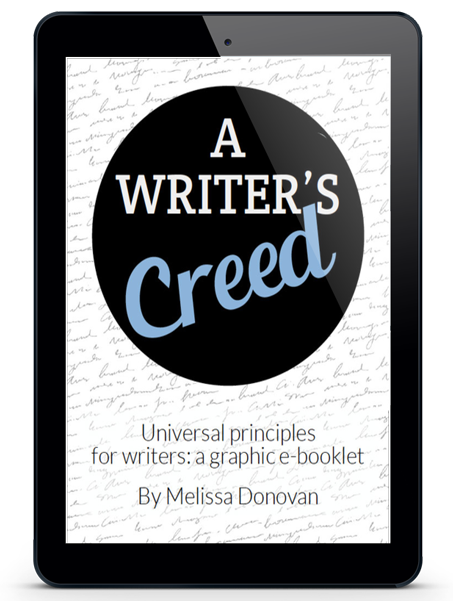
Subscribe and get The Writer’s Creed graphic e-booklet, plus a weekly digest with the latest articles on writing, as well as special offers and exclusive content.